Written by NexDoor Editorial Team | Reviewed by NexDoor Advisory Team | Apr 2026
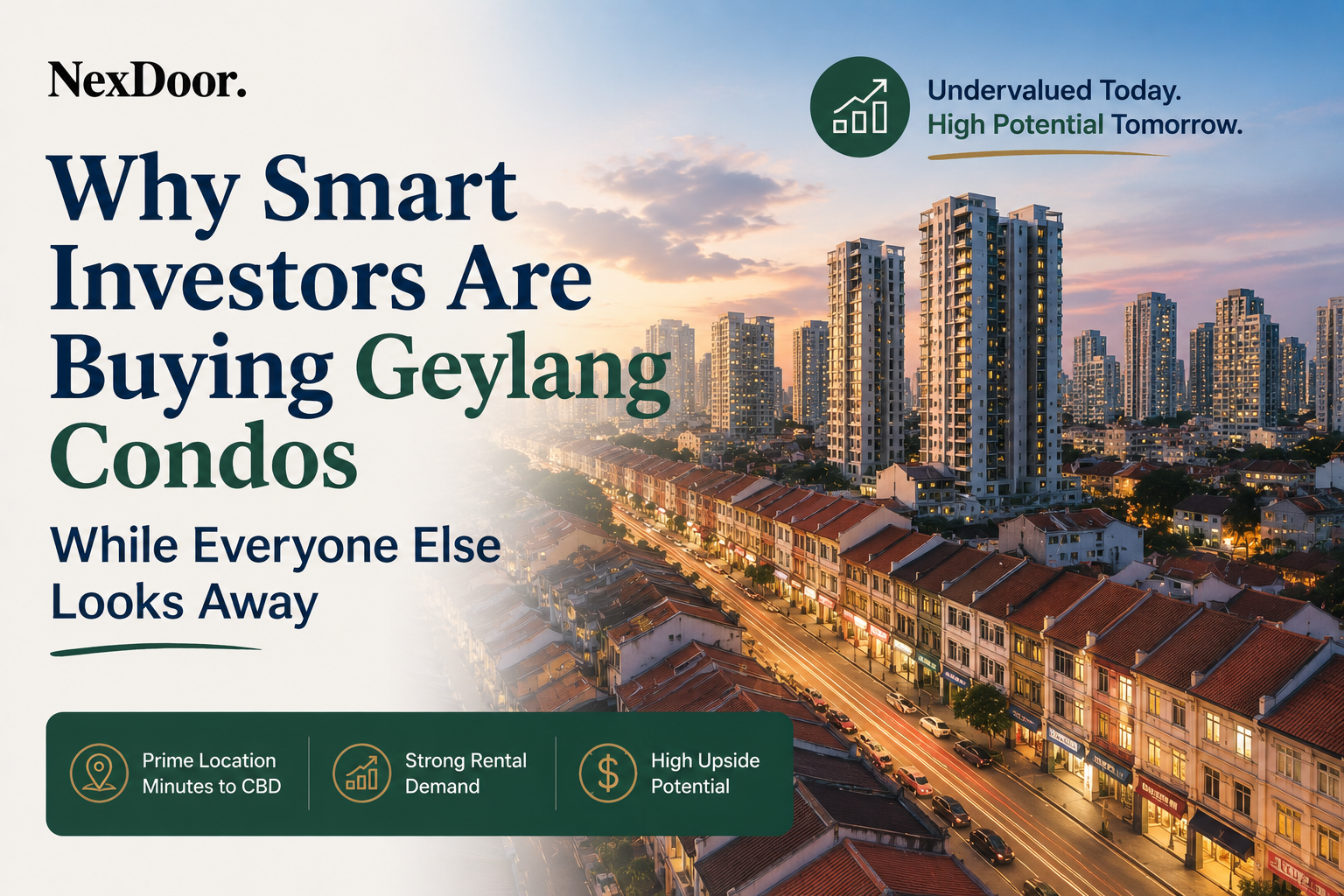
Every property market has a district that the numbers like more than the crowd does. In Singapore, that district is Geylang.
The reputation is well-known and we are not going to pretend otherwise. But reputation and investment fundamentals are two different conversations — and in Geylang's case, the gap between them is exactly where the opportunity sits. While the broader market looks away, a specific type of investor is quietly accumulating freehold stock at prices that comparable RCR locations stopped offering years ago.
Here is what the data shows.
The Fundamentals That the Stigma Is Hiding
Strip away the perception and examine Geylang on pure property fundamentals.
Freehold tenure. A significant portion of Geylang's condo stock is freehold — one of the most structurally valuable attributes in Singapore's private residential market. In a country where most land is leasehold, this matters.
Connectivity that rivals far more expensive addresses. Aljunied MRT on the East-West Line puts Geylang one stop from Paya Lebar, minutes from Bugis, and within practical reach of the CBD. This is not a fringe location. It is a central-fringe location priced with a stigma discount.
Entry prices that still make sense. Condos on the Geylang Lorong addresses — the core of the district — are currently transacting around $1,200 to $1,650 psf for many older resale units. Comparable RCR locations with similar access often trade closer to $2,000 to $2,600 psf. That discount is not subtle.
Rental yields that outperform the Singapore average. Gross rental yields in core Geylang typically range from 3% to 5% — significantly stronger than many OCR and RCR condos purchased at today's elevated prices.
Who Is Actually Renting in Geylang
The owner-occupier reluctance that keeps Geylang prices low does not extend to the tenant market — and that disconnect is important.
Expatriate tenants relocating for work prioritise connectivity, value, and proximity to commercial districts. Geylang delivers all three. It sits close to Paya Lebar, Kallang, Bugis, and the CBD, while offering rental rates that remain more palatable than many central alternatives.
This tenant profile is stable. It is not going away. And it supports occupancy and rental rates in a way that sustains the yield thesis over a medium to long holding period.
The URA Rezoning Tailwind
URA's ongoing rezoning of portions of Geylang for commercial use adds a structural dimension that longer-term investors are paying attention to. As residential stock in selected areas becomes constrained over time, existing freehold residential properties become more valuable by scarcity, not hype.
Less residential supply in a location with sustained tenant demand is a straightforward setup for rental rate support and capital floor protection over time. It does not mean every Geylang condo is a good buy. It means the right ones deserve a more serious look than the average buyer is willing to give them.
The Honest Case Against
Geylang is not the right answer for every investor, and the strongest version of the investment case acknowledges this directly.
Own-stay buyers should look elsewhere. School environment, estate character, and family considerations make Geylang a difficult fit for owner-occupiers. The exit buyer pool is narrower than in more conventional residential estates.
Capital appreciation is not the primary thesis. The gap between core Geylang PSF ($1,200–$1,650) and the D14 fringe ($2,000–$2,600) reflects a market boundary that may narrow, but is unlikely to disappear quickly.
A longer hold improves the risk profile. Investors who need a clean exit within 3 to 5 years face a narrower buyer pool than comparable RCR locations. The thesis works best for buyers who can hold through noise and collect yield while the area evolves.
The Opportunity in Plain Terms
Freehold tenure. Above-average yields. Entry prices at a structural discount to its own district fringe. Tenant demand supported by genuine connectivity. And a long-term rezoning story that reduces future residential supply in selected pockets.
The market's discomfort with Geylang is real. So is the financial case for looking past it. The investors who understand the difference between a perception discount and a fundamental weakness are the ones quietly paying attention.
If you are evaluating Geylang against other RCR investment options and want a data-driven comparison of entry price, yield, and exit considerations, NexDoor is happy to run the analysis with you.
📩 Reach out to NexDoor — let's look at whether the numbers work for your investment profile.
Source: URA Residential Transaction Data (2026)