Written by NexDoor Editorial Team | Reviewed by NexDoor Advisory Team | Apr 2026
Key Takeaways
Central living costs $2,000–$3,500 more per month than suburban — housing and lifestyle combined
That gap compounds to $240,000–$420,000 over 10 years
Suburban living gives you 300–400 sqft more space for the same or lower cost
The extra commute from suburbs adds approximately 360 hours per year versus central living
Neither is objectively better — the right answer depends on what you actually value
Singapore is small enough that the difference between central and suburban living is measured in MRT stops, not hours. But those stops translate into meaningfully different daily lives — different costs, different space, different rhythms. Here is what central vs suburban living in Singapore actually looks like when the numbers are laid out clearly.
What Central vs Suburban Living in Singapore Actually Looks Like Day-to-Day
Before the numbers, it helps to define the terms.
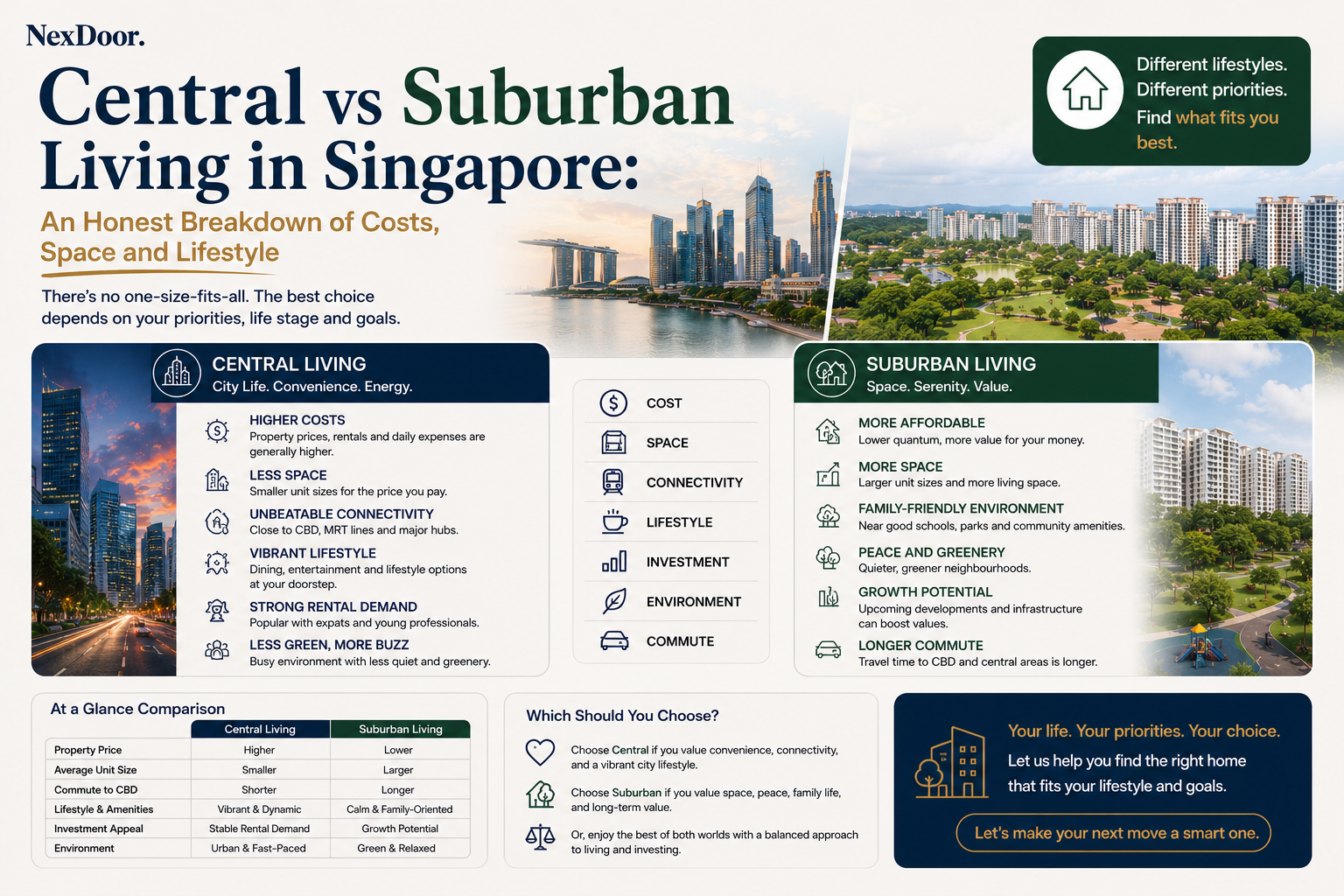
Central living covers Districts 9, 10, 11 and parts of 1–8: Orchard, River Valley, Tanglin, Newton, Novena, Tanjong Pagar, Marina Bay, and the premium parts of Bukit Timah. Short commutes, dense amenities, premium pricing.
Suburban living covers Districts 15–28 and outer parts of 12–14: Tampines, Bedok, Jurong, Woodlands, Punggol, Sengkang, Pasir Ris, Yishun. More space, lower costs, longer commutes.
The grey zone — Queenstown, Tiong Bahru, Clementi, Toa Payoh — sits between the two. Close enough to the city to offer reasonable commutes, established enough to have genuine neighbourhood character and more affordable pricing. Worth considering as a third option.
The Cost Comparison
Housing costs (indicative 2025–2026 market rates):
| Property Type | Central | Suburban |
|---|---|---|
| 2-bed condo rental | $4,500–$7,000/month | $2,500–$3,800/month |
| 2-bed condo purchase | $1.8M–$3M+ | $800K–$1.2M |
| Monthly mortgage (purchase) | $6,000–$10,000 | $3,200–$4,800 |
| HDB 4-room resale purchase | Limited supply, premium pricing | $500K–$700K |
| HDB monthly mortgage | — | $2,000–$2,800 |
Daily lifestyle costs:
| Category | Central | Suburban |
|---|---|---|
| Coffee | $6–$8 (café) | $1.50–$3 (kopitiam) |
| Weekday lunch | $12–$20 | $5–$10 |
| Weekday dinner | $15–$30 | $8–$15 |
| Gym membership | $150–$300/month | $80–$150/month |
| Total lifestyle (monthly) | $1,500–$3,000 | $800–$1,500 |
The combined gap:
| Monthly | |
|---|---|
| Housing savings from suburban | $1,500–$2,000 |
| Lifestyle savings from suburban | $700–$1,500 |
| Total monthly difference | $2,200–$3,500 |
| Over 10 years | $264,000–$420,000 |
For many households, that 10-year gap represents the down payment on their next property.
The Space Comparison
Space is where the suburban case is clearest.
Central 2-bedroom condo (~850–950 sqft):
Master bedroom fits queen bed and small wardrobe
Second bedroom: choose between a single bed or a desk — rarely both
Living area fits sofa and TV console; a proper dining table is usually replaced by a breakfast bar
Kitchen fits one person cooking comfortably
Storage requires creative solutions throughout
Balcony exists but is primarily decorative
Suburban 3-bedroom condo (~1,100–1,300 sqft):
Master bedroom fits king bed, full wardrobe, and dressing area
Second bedroom functions as a proper guest room or study
Third bedroom available for children, gym, or storage
Living area fits a full sofa set and dining table for six
Two people can cook simultaneously
Balcony is usable for morning coffee or evening meals
Dedicated storage in yard, bomb shelter, and built-ins
Suburban HDB 4-room (~1,000–1,100 sqft): Similar to the suburban condo above, with the addition of a hawker centre and neighbourhood amenities downstairs, and a meaningfully lower purchase price.
The space difference between central and suburban — 300 to 400 sqft — is roughly equivalent to an entire additional room. For households with children, a home office requirement, or simply a preference for breathing room, this is not a marginal consideration.
The Commute Reality
Central commute:
Average: 15–25 minutes door to office
Monthly transport cost: $50–$80
Annual time cost: baseline
Suburban commute:
Average: 45–60 minutes door to office
Monthly transport cost: $120–$150 (public transport) or $300–$500 (driving)
Annual additional time versus central: approximately 360 hours — roughly 15 full working days
That 360 hours is the honest cost of suburban living for CBD-based workers. Whether 15 days per year of additional commute time is an acceptable trade-off for $2,200 to $3,500 in monthly savings and significantly more living space is a genuinely personal calculation.
Two factors reduce the commute burden meaningfully: working from home 2 to 3 days per week cuts the annual time cost by 40 to 60%, and departing from an end-of-line MRT station typically means a guaranteed seat for the duration.
The Daily Living Experience
A central morning: A 15-minute commute means a later alarm, no transit stress, and the option to return home for lunch. Spontaneous evening plans are easy — you are already near everything. The trade-off is that the apartment is smaller than you might like, storage is a constant negotiation, and the cost of daily conveniences accumulates quietly.
A suburban morning: The alarm is earlier and the commute is longer, but the home itself is genuinely comfortable. There is counter space in the kitchen, room for a proper dining table, and a balcony that serves a purpose. The commute is real — but it is predictable, and for many people, it becomes routine rather than genuinely stressful.
Social life: Central living makes spontaneous socialising easy — everything is close, plans require minimal lead time, and the density of options means something is always happening nearby. Suburban living shifts social activity toward home-based gatherings, which tend to be more intentional and less frequent but often more comfortable given the available space. Both work. They just look different.
The Hybrid Option
The grey zone estates — Queenstown, Tiong Bahru, Toa Payoh, Clementi, Ang Mo Kio — offer a practical middle path.
Commute times of 25 to 35 minutes are not central, but they are not suburban either. Pricing sits meaningfully below prime districts while remaining above outer suburbs. Mature estate infrastructure means hawker centres, wet markets, community facilities, and established schools are in place. The living environment is urban but not frantic.
For young families, couples planning ahead, or buyers who want balance rather than optimisation in either direction, these estates frequently represent the most practical choice in Singapore's property landscape.
How to Choose
| Central suits you if | Suburban suits you if |
|---|---|
| Daily CBD commute is non-negotiable | You work from home 3+ days a week |
| You are out most evenings and value spontaneity | You have children or plan to |
| Space is a lower priority than convenience | Space and storage are genuine priorities |
| Your income comfortably absorbs the premium | The monthly savings matter to your financial plan |
| You are at a life stage that prioritises experience density | You value home comfort over location prestige |
The decision comes down to what you actually value — not what seems like the right answer. Central living optimises for time and convenience. Suburban living optimises for space and cost. Both produce households living well. The mistake is choosing based on what looks good rather than what fits how you actually live.
If you want a data-driven comparison of specific estates across both central and suburban Singapore — including realistic purchase costs, commute times, and resale liquidity — NexDoor is happy to work through it with you.
Reach out to NexDoor — let's match the right location to how you actually live.
Housing cost ranges are indicative based on 2025–2026 market observations. Actual prices vary by block, floor, condition, and market timing. This post does not constitute financial advice.